
Interactive energy classroom
Home Electricity & Solar Visualizer
Build the appliances in your home, adjust how you use them, and see where every kilowatt-hour goes. Then add solar panels and compare gross consumption with the electricity you may still need from the grid.
1 Add or remove appliances
2 Set usage and time
3 Compare grid and solar
Your household scenario
Build your electrical home
Interactive cutaway
See energy use room by room
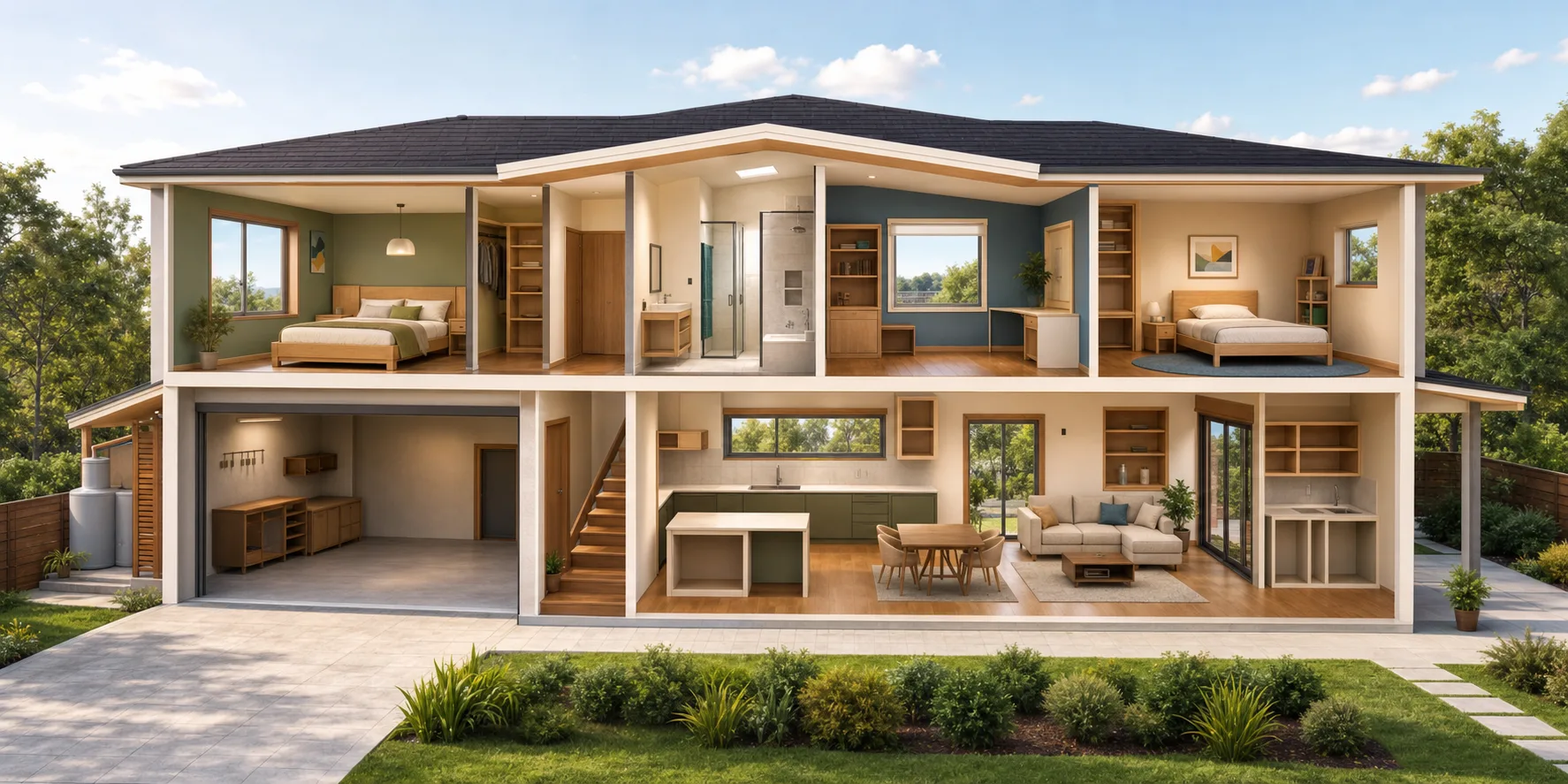
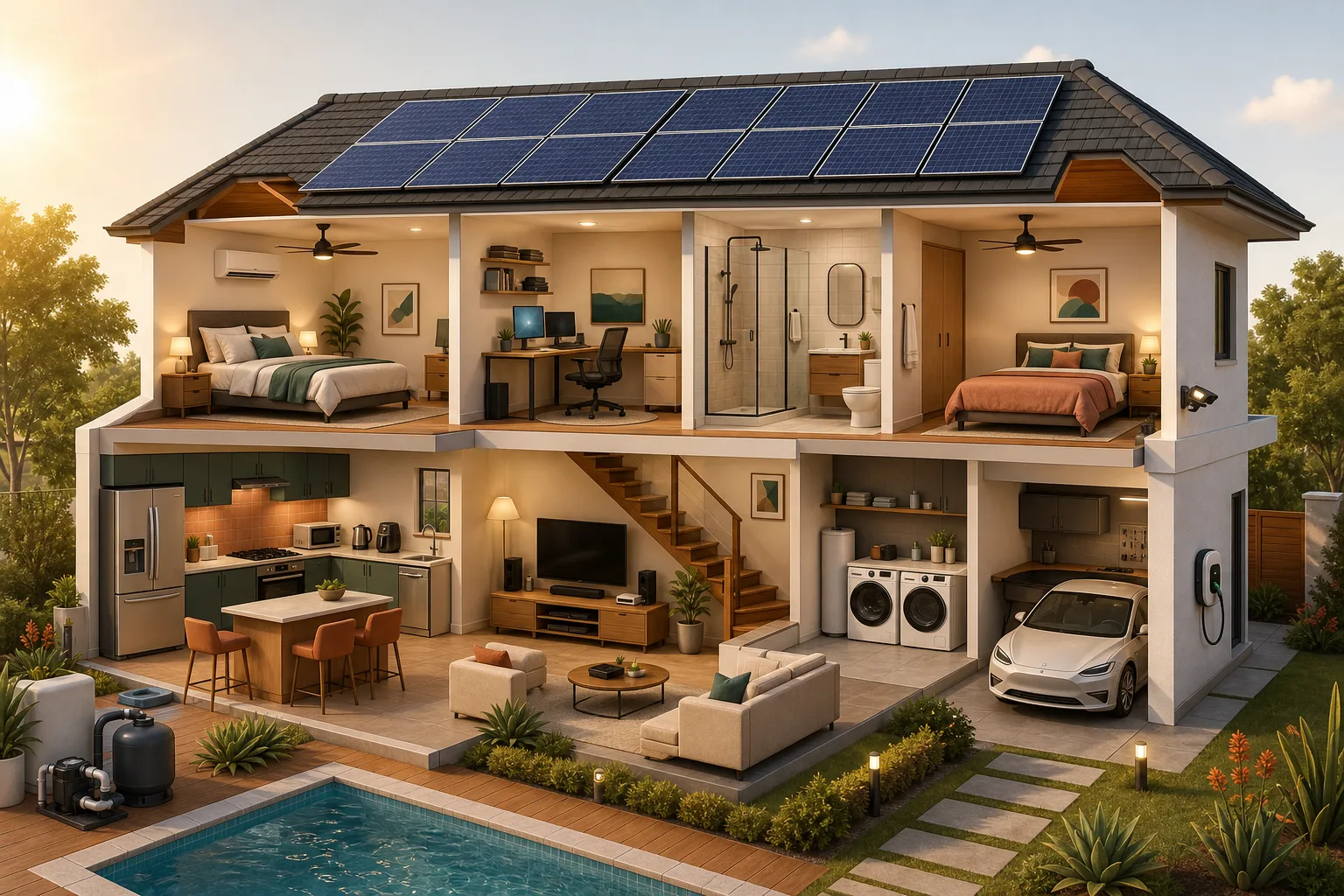
Select a room to focus, drag to pan, and use the buttons or Ctrl/Command + wheel to zoom. Arrow keys pan the focused image; 0 resets the view.
Selected appliance settings 0 selected
Solar contribution
Add panels without hiding the household load
Your gross appliance consumption stays visible. Solar is calculated separately, then applied only as an estimated reduction in grid-supplied electricity.
This simplified educational estimate does not model address-specific weather, roof direction, shade, batteries, export payments, or time-of-use tariffs.
What the scenario teaches
Follow the energy from appliances to grid
House demand—
Solar used—
Grid import—
Consumption by room
Consumption by category
Largest appliance loads
Useful observations
Individual appliance calculator
Inspect one appliance at a time
Choose a catalog item or enter a custom device. This separate calculator is useful when you have a nameplate wattage and want a quick cost estimate without changing the house.
Appliance——
Watts × hours × quantity ÷ 1,000
Read the numbers with confidence
Electricity concepts that make estimates useful
Watts are power
Watts describe how quickly a device uses energy while operating. Kilowatt-hours combine that power with time: watts × hours ÷ 1,000.
Labels beat averages
Use the appliance energy label, nameplate, manufacturer information, utility data, or a plug-in meter whenever possible. Defaults here are editable examples.
Small standby loads persist
Televisions, consoles, printers and chargers can draw power while apparently off. The separate standby total helps make that quiet use visible.
Solar changes the source
Solar can supply part of the same household demand. It does not make an appliance consume fewer kWh, and surplus generation is not automatically bill credit.
Calculation method and limits
Timed appliances use the standard kWh = watts × hours ÷ 1,000 relationship described in U.S. Department of Energy teaching guidance. Standby is treated separately in line with DOE standby-power guidance. Solar uses a transparent capacity × sun-hours × efficiency model; it is an educational approximation, not the address- and weather-specific modelling of NREL PVWatts.
From awareness to routine
Keep the systems behind your energy use maintained
Housemindr helps you schedule filter cleaning, appliance checks, solar inspections, water-heater servicing, and the recurring jobs that keep home systems working efficiently.
Frequently Asked Questions
How is appliance electricity consumption calculated?
Timed appliances use watts × hours ÷ 1,000. Always-on appliances include a cycling factor, while washing machines, dishwashers, and similar devices use energy per cycle and cycles per week.
Does solar reduce my home's electricity consumption?
Solar does not change gross appliance consumption. It changes where some electricity comes from, reducing estimated grid import by the amount of generated solar the home can use directly.
Why is only part of solar generation counted as direct use?
Without a battery, generation and household demand do not always happen at the same time. The editable self-use percentage lets you model that mismatch without claiming a location-specific result.
Where should I find appliance wattage?
Check the label on the rear or underside, the energy label, the manual, or manufacturer data. A plug-in electricity meter is useful for devices that cycle or vary their power.
Can I use this estimate as my expected utility bill?
Treat it as education and scenario planning. Real bills can include tiered rates, taxes, fixed charges, time-of-use prices, export credits, seasonal behaviour, and appliances not represented here.